
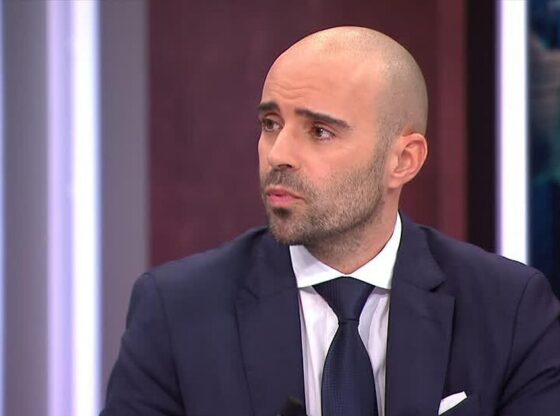

Benfica goes to the vote on October 25th. DN challenged the six candidates for the club’s presidency for the four-year period 2025-2029, Rui Costa, Luís Filipe Vieira, João Noronha Lopes, João Diogo Manteigas, Martim Mayer and Cristóvão Carvalho, to answer the same five questions on five essential topics in the life of the club, from the priority after the election, to politics and the sports project for football, passing through the liabilities and future of the Benfica institution. Here are João Diogo Manteigas’ answers.
The priority of priorities, once elected is…
Immediately meet with all football technical teams (professional and campus) and modalities to present, explain and discuss our project and sporting model with them; immediately analyze all commitments until the end of the year with suppliers, creditors and third parties, launch a competition to collect proposals with a view to the forensic audit of the Benfica group, meet with the League and Federation to begin debating our vision and future of Portuguese football on topics such as arbitration, centralization of audiovisual rights and changes to competitive frameworks, immediate reformulation of the communication department with the new director of communication and presentation of the initial strategic plan for Casas Benfica.
How is the balance found between training and the sporting demands of a club like Benfica: Training to sell and sustain the sporting project or training to feed the team and have sporting success.
It is possible to have sporting success and financial profitability by investing in training. The process involves taking a conscious risk in the formation and retaining these players as much as possible. Identify talent, develop it, invest in it, retain it and only release it after the necessary sporting success (titles). For this to be possible, it is necessary to achieve greater efficiency in the management of the professional squad (team A and B) to reduce the number of players per squad, investing in more quality and less quantity, as well as continuing to be a master in player transactions (selling above market value and buying below market value). This strategy will achieve the following formula: more quality (the best athletes in Portugal must be at Benfica), more balance (minimum of 2 different players per position) and more commitment (athletes must understand and accept the history, values and principles of Sport Lisboa e Benfica).
Benfica presented a positive result of €34.4 ME. Liabilities fell to €474.9 million – is this still a problem? And how do you lower it further?
Liabilities decreased by €8M compared to 30Jun2024, however, they increased by 25% during this mandate of the current Board since 2021. Liabilities must be managed taking into account strategic investment priorities. With regard to Liabilities, we understand that the most worrying value is the consecutive increase in debt owed to Sports Clubs and Societies related to the high number of athlete transactions and their respective acquisition value. In order to reduce this debt, Benfica will have to invest heavily in training for the main squad (team A), acquiring fewer players but with more quality. Additionally, you will have to work on capturing additional current revenue (examples: we of the Stadium and other infrastructures) in order to be able to allocate part of these additional revenues to reduce Liabilities, without ever losing sporting competitiveness.
Does José Mourinho fit into your sporting project for football? Why?
Any coach, whether Bruno Lage or currently Mourinho, are SAD workers, members who must respect the sporting strategy that is designed and implemented by the SAD administration and the Club’s management. With respect for the coaches, they are not the ones who determine the sporting project of clubs or sports societies. Especially because they will always be in the institutions for a shorter period of time, being subject to sporting results or leaving early for other job opportunities. Despite the fact that they enjoy a certain technical autonomy, they must respect the guidelines of the sports plan and model that will be drawn up and outlined for them by the administration that hired them. In the case of our candidacy, we will apply a sports model consistent with optimizing the market value of teams in which they are no longer managed as cost centers that spend revenue from SAD’s commercial activities and become a portfolio of assets that generates value.
What will Benfica look like in the future? (A reformist measure until 2030)
It is essential to reform the ticket sales system. We will bring more transparency and we will stipulate, together with the partners and after listening to them, what criteria they want for this problem at Benfica. We have to make known the allocation of tickets per game, especially outside of Luz, what categories of tickets and the quantity of them are available for each group of members, such as corporatesponsors and partners. There will have to be an allocation of ticketing, however tiny it may be, to the Benfica houses closest to the stadiums where Benfica goes outside of Lisbon. Demand is much higher than supply due to Benfica’s greatness. But there are measures that should already exist, such as modernizing the online system with a digital counter showing the number of tickets available and developing an intelligent virtual queuing system that distributes fair access to ticket purchases, communicating the user’s position and estimated waiting time in real time.
isaura.almeida@dn.pt