


Following its time in Acaria favela in Rio de Janeiro’s North Zone, in August, the ‘Favela Climate Memory’ exhibition continued its tour through River of stonesa favela in the city’s West Zonein early September. Organized by community collectives RP peripheral connections, Sowing love and Recanto da Arreinhathe exhibition was widely visited by residents from September 1-14, circulating through key cultural spaces, schools and headquarters of community groups.
Watch the video of the exhibition in Rio das Pedras above, in Portuguese, or by clicking here.
With original testimonials and historical data, the ‘Favela Climate Memory’ exhibition explores the relationships between climate, nature and territory across ten favelas in Rio de Janeiro interactively and affectionately. In Brazil’s fifth largest favela, Rio das Pedras, the exhibition toured spaces across all of the favela’s zones: Sowing Love Social Project (September 1-2), Recanto da Arreinha (September 3), Euclides da Cunha State High School (September 4-5), the local College Prep Course (September 6), Cine & Rock (September 7), Cultural Center Centera (September 9), Master Diego Braga Technical School (September 10), Professor Emília Maria Vieira de Oliveira Child Development Center (September 12-13) and the Engenheiro Market (September 14).
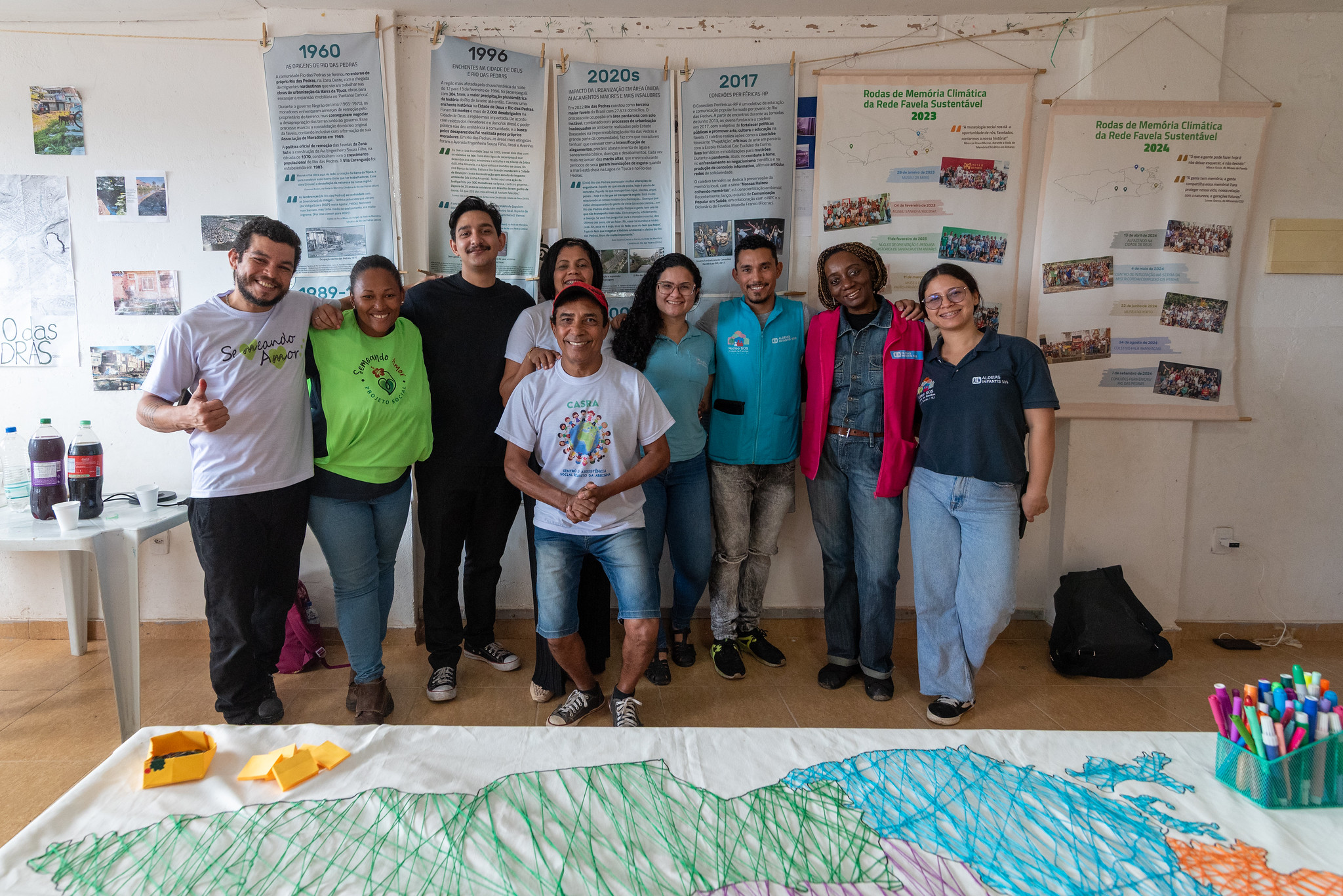
The Sowing love hosted the exhibition’s debut in Rio das Pedras on September 1. Local resident and organizer Fernando Barros, who facilitated the Rio das Pedras climate memory circle in September 2024—where the community’s testimonials featured in the exhibition were collected—offered context on how the work took place.
“The day of the [climate memory] discussion circle was very interesting for me and very important for the collective. It was essential for our growth and strengthening as a group. There were a few familiar faces in that circle—people that I really care about—and I had the opportunity to get to know a part of my home, of Rio das Pedras [through their testimonials]. In that moment, they shared a bit of our history of struggle. I already felt a lot of affection for these people, but learning that they were part of a fight, of resistance, of our victory… it changes the way we see certain people, and the way we see our own sense of belonging here in the favela.” — Fernando Barros
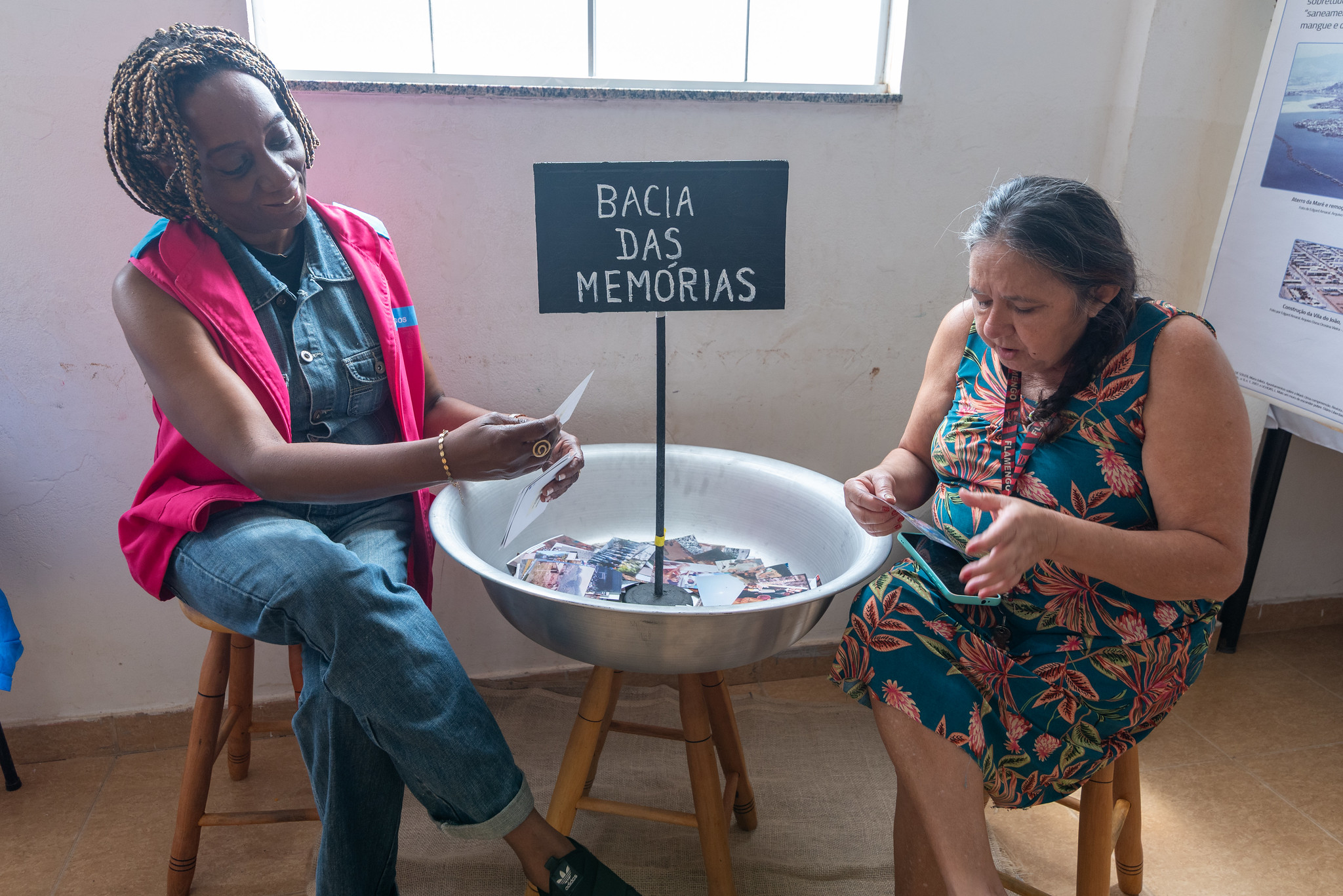
Maria Wellen, a resident of Rio das Pedras and volunteer at the Semeando Amor and Conexões Periféricas RP collectives, shared her experience as a participant in the climate memory circle.
“In the circle, I remember us talking about… climate anxiety. We brought up some really important issues and now, here at the exhibition, I’m seeing them on display: [in] the Basin of Memories. [The installation] holds physical photos of important events from each favela. And [being] there, holding some of the photos of Rio das Pedras… that really show these climate anxieties—landslides, places that burned down… I think it’s really important because it grounds you in reality, it pulls you out of that ‘oh, that was in the past’ mindset. It’s right there next to you: you’re looking at what happened. We tend to hear about these things like they’re myths. But then, looking [at the photos]it hits you: it really did happen, didn’t it?” — Maria Wellen
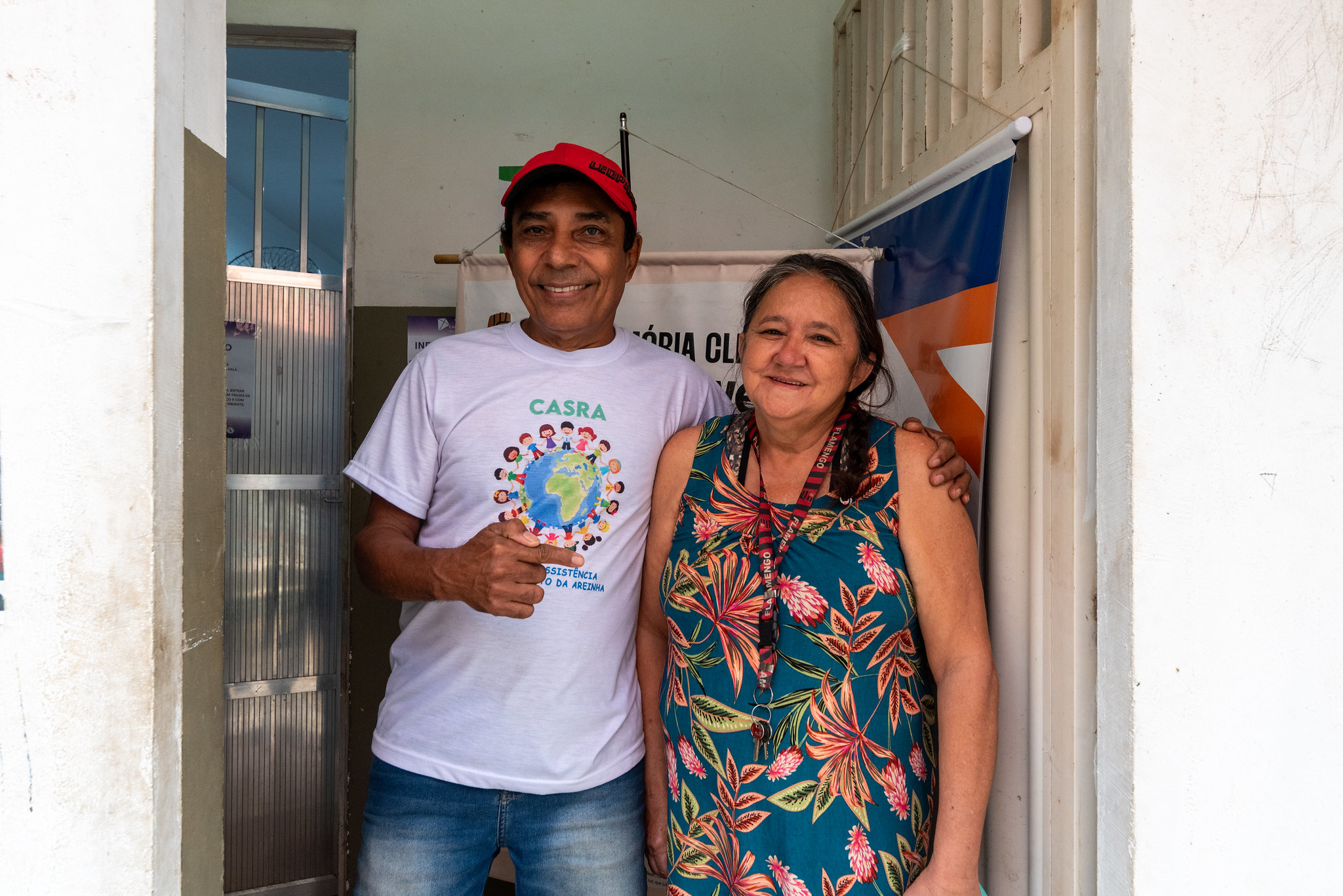
The opening of the exhibition in Rio das Pedras was attended by long-time residents, such as Marilene Veras, who has lived in the community for over 30 years. She remembers Rio das Pedras in the early days of its occupation.
“This used to be a lagoon—there were no houses here. We started with our little shack way down at the very end. From there to here… it was nothing but water. Rio das Pedras was all water, and there was a lagoon right here… Then came electricity—just a single lightbulb over there—and there were alligators, you know? We had wooden shacks, just wood. No way anyone had tile floors back then, right? And no such thing as cement around here, none at all. Back then, things were really good.” — Marilene Veras
Carlos Silva, a resident of Rio das Pedras for 44 years, fought for improvements over the decades and worked for 18 of them at the Rio Das Pedras Residents’ Association. During the discussion circle that informed the exhibition, he gave several testimonies that make up the final display. Seeing the resulting exhibition, he emphasized the importance of favela residents organizing around a popular movement for better living conditions in their communities.
“[This exhibition] is very important for people to get to know the struggles and how determined [residents] are—each one in their own peripheral areas, with their own peripheral connections: City of God, Acari, Penha. In fact, I know every one [of these communities]… This visit is important so others can understand people’s struggles, right? Of residents fighting for their right to housing—because we all should have the right to a decent home, basic sanitationupgrading, and paving, along with spaces for sports, leisure, culture, and health… I say that I am a [true Rio das Pedras] local. I came to this community in 1979 and took part in the struggles for housing and sustainability, aimed at ensuring that people could have decent homes.” — Carlos Silva
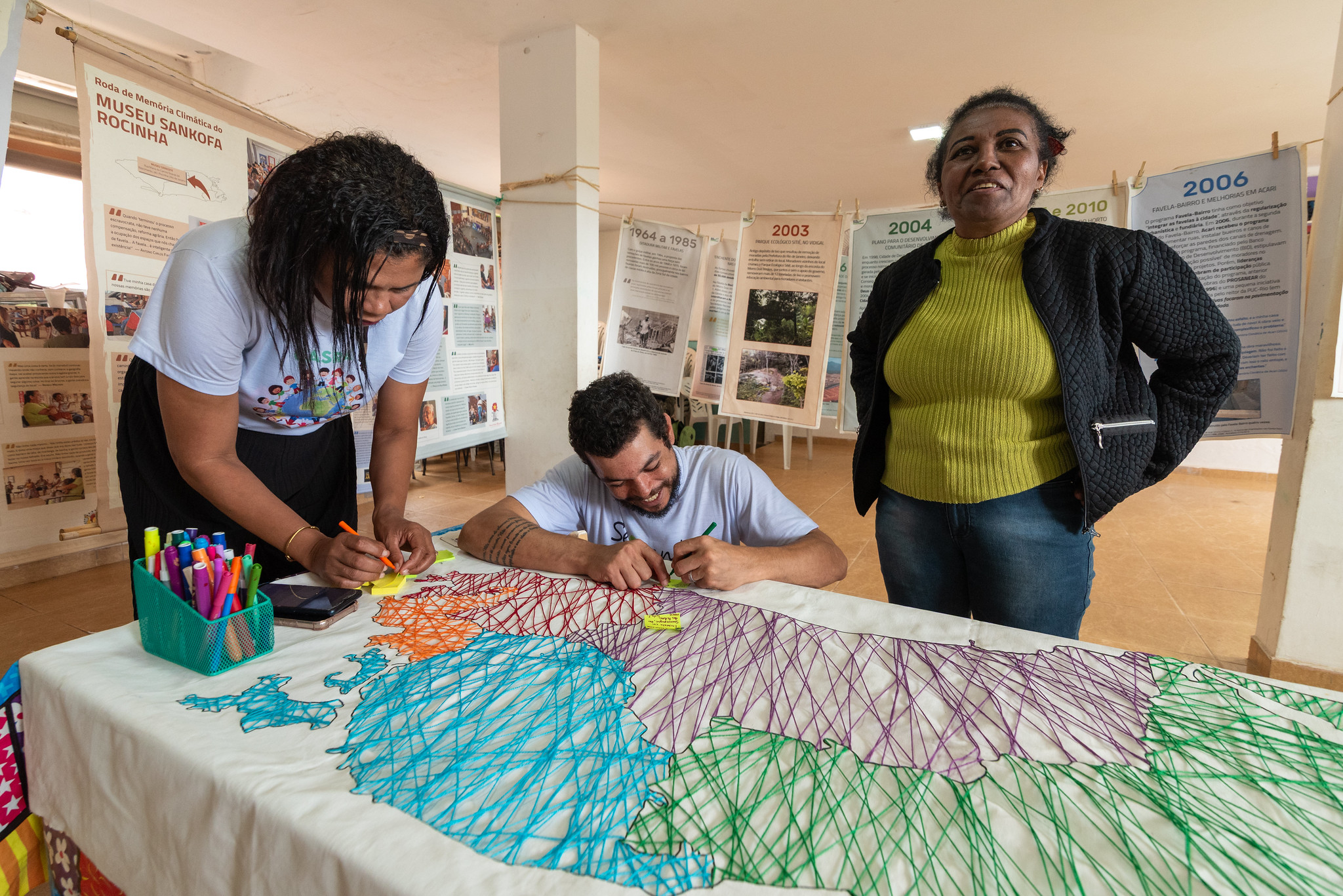
Claudia Santos, another resident of Rio das Pedras and participant in the Semeando Amor social project, shared how her life story intertwines with the community’s history.
“I arrived in Rio das Pedras on July 19, 1991, so I’ve been here quite a while. I’ve watched Rio das Pedras grow on such a gigantic scale, so to have an event like this in the community—for me, participating for the first time—is just the greatest thing. It’s been such a joy to contribute to the history, with the poetry we created last year. It’s too bad that people still haven’t grasped the purpose of all this, because this place has historywe have stories… It’s very touching [to take part in the exhibition]. You know what I wish? That every resident were here to contribute… I’m here participating, contributing, wanting to bring my grandchildren, my relatives… Rio das Pedras is a place that holds so much history, it’s not just about tragedy—we have hardworking people who raised their children, their grandchildren, who arrived here and planted their feet in the mud, you know, to build their homes.” — Claudia Santos
View the photo album of the exhibition during its full tour through Rio das Pedras:

*The Sustainable Favela Network (SFN) and RioOnWatch are both initiatives of not-for-profit organization Catalytic Communities (CatComm). The ‘Favela Climate Memory’ exhibition brings together 1,145 testimonials from 382 residents of ten favelas across Rio de Janeiro, collected and analyzed over three years, produced through a collective oral history project. The exhibition was developed by eleven museums and favela memory collectives that are members of the SFN: the Tide museum (Maré Favelas Complex), the Sankbova museum (Rocinha Favela), The Historic Orientation and Research Nucleus of Santa Cruz (organizer of the Antares climate memory circle), the Museum slum (Peacock-Pavãozinho/Cantagalo Favelas), The Vidigal Nucleus Memories (Vidigal Favela), Allegy (City of God favela), the Serra da Misericórdia Integration Center (Penha Favelas Complex), the Horto Museum (Horto Favela), Speak Akari (Acari Favela), Peripheral connections (Rio das Pedras favela), and the Evictions Museum (Village Autódromo favela).
About the author: Barbara Dias was born and raised in Bangu, in Rio’s West Zone. She has a degree in Biological Sciences, a master’s in Environmental Education, and has been a public school teacher since 2006. She is a photojournalist and also works with documentary photography. She is a popular communicator for Núcleo Piratininga de Comunicação (NPC) and co-founder of PHOTOGUERRILHA COLLECTIVE.