

The keys
nuevo
Generated with AI
nuevo
Generated with AI
The former prime minister Tomiichi Murayamawho was the first Japanese president in explicitly apologize for war crimes committed by the Japanese country against other Asian nations during the World War IIdied this Friday at the age of 101, as confirmed by the leader of the Social Democratic Party of Japan, Mizuho Fukushima.
“My father-in-law, Tomiichi Murayama, died today at 11:28 (02:28 GMT) in a hospital in the city of Oita at the age of 101. I am deeply shocked by his death,” Fukushima wrote on her X social network account, mentioning in particular the famous Murayama Declaration of 1995which he described as of “great political importance.”
The declaration recognized that Japan, “through its colonial rule and aggression, caused enormous damage and suffering to the people of many countries, and particularly those of Asian nations”, and asked forgiveness for the atrocities committed during the war, when 50 years have passed since the end of the conflict and the surrender of Tokyo.
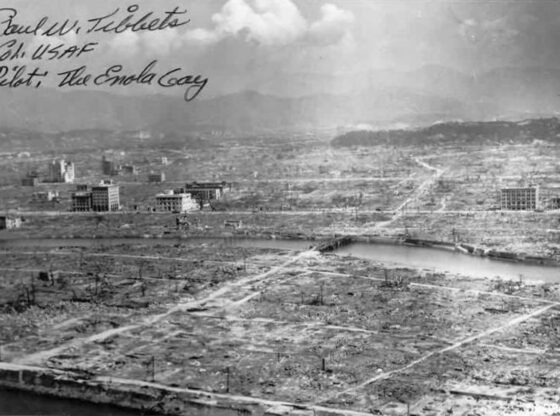
Photograph taken after the dropping of the atomic bomb on Hiroshima by the pilot of the Enola Gay, Paul Tibbets, on August 6, 1945.
“I consider, in a spirit of humility, these irrefutable facts of history and here again express my feelings of deep remorse and present my most sincere apologies,” he said, adding that the job of Japanese politicians was to “transmit to the younger generations the horrors of war so that they let us never repeat the mistakes of our history“.
Murayama He led the Japanese Government for two yearsfrom 1994 to 1996, a period of great political uncertainty and unstable coalitions, after the loss for the first time in 38 years of the absolute majority of the Liberal Democratic Party of Japan (LDP), the dominant force in Japanese politics since the post-war, in the 1993 elections.
His rise to power was a surprise because he was 70 years old and, after two decades in the House of Representatives, he was not well known nor had he ever held a Cabinet position or participated in international negotiations. But his figure was the one chosen to resolve the political crisis that affected the Japanese country.
After a year of unsuccessful coalition governments, the politician, then leader of the Japanese Social Democratic Party, managed to form a coalition Executive with the LDP and the New Sakigake Party (now defunct) in 1994, becoming the first social democratic leader of Japan since the 1940s.
The apology for war crimes was the most significant achievement of his tenure, going further than any other Japanese leader in expressing regret for the murder, rape and torture of millions of people. However, it was limited by the conservatives in the coalition and the request for forgiveness did not meet the demands of China or South Korea.
Murayama, who died in his hometown of Oita, after retiring from politics in 2000, paved the way for his successorswho have since repeated his words of “deep remorse” and “sincere apologies” in their speeches commemorating the end of World War II.