
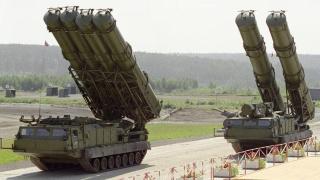

The situation in the Caribbean, with the threatening military deployment of the United States off the coast of Venezuela, could become even more tense with the possible military intervention of Russia in favor of its Venezuelan ally. This after official sources in Moscow have confirmed that The Kremlin evaluates supplying Venezuela with its most recent generation of hypersonic missilesknown as Oreshnik, after a direct request for help from the government of Nicolás Maduro.
The announcement was made by Russian deputy Alexei Zhuravlyov to the local media Gazeta.ru. According to the parliamentarian, “Russia already supplies a wide range of weapons to Venezuela and there are no legal impediments to transferring more advanced systems.”
Furthermore, the politician with strong ties to Vladimir Putin’s government has indicated that The details about the type of weapons being transferred “is classified information”suggesting that Washington could get “more than one surprise” if it finally chooses to carry out any military action on Venezuelan territory.
In this sense, Zhuravlyov has emphasized that Moscow has no international restrictions that prevent it from collaborating with “a friendly country” and has highlighted the proven effectiveness of Russian missiles, which the country has used in various war scenarios and, above all, in the war in Ukraine.
According to US documents cited by The Washington PostMaduro would have sent urgent letters to both the Russian president and the leaders of China and Iran. In those letters, The Venezuelan president would have requested military cooperation to “strengthen a deteriorated defense system”including radars, aircraft parts and missiles.
A colossal missile
El misil Oreshnik, an updated version of the RS-26 Rubezh developed since the late 2000srepresents one of the most significant advances in Russian strategic doctrine. This intermediate-range ballistic missile system incorporates a multiple independent target reentry vehicle (MIRV), capable of carrying up to six warheads, both conventional and nuclear.
The MIRV design allows each warhead to be directed to a different target after separation from the main missile, complicating any interception attempt. An analysis by the Center for Strategic and International Studies (CSIS) highlights that Its speed and trajectory make it almost impossible to detect it before reaching its terminal phase.especially by conventional anti-aircraft systems.
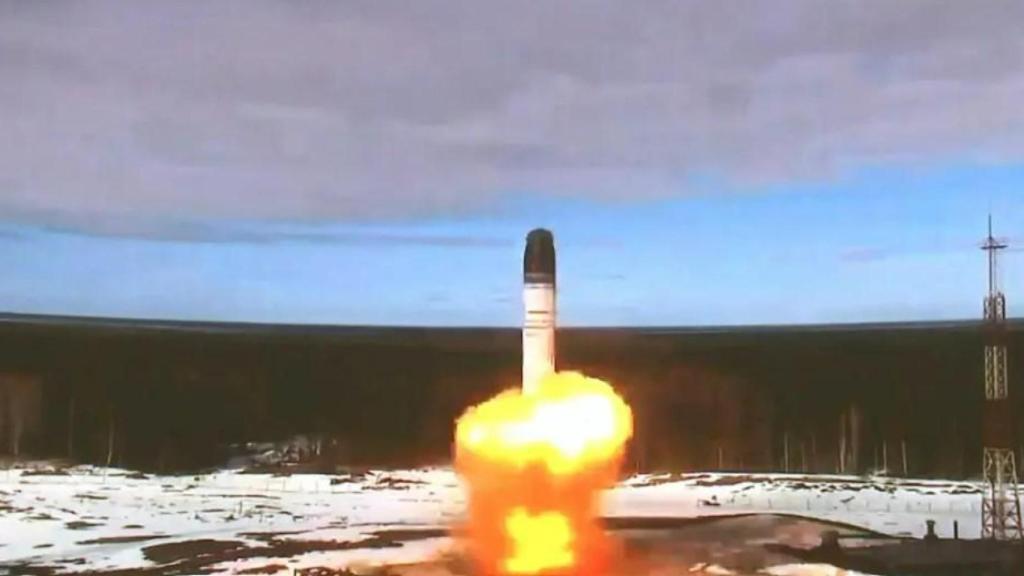
Archive image of the successful test of the new Oreshnik hypersonic missile
The Oreshnik are designed to reach speeds greater than Mach 10—more than 12,300 km/h—a figure that places this projectile among the fastest weapons in the world’s arsenal. At a technical level, The missile weighs between 30 and 40 tons, measures 15 to 18.5 meters in length and has an approximate diameter of 1,860 millimeters. It uses solid fuel propulsion and a programmed detonator capable of generating temperatures of up to 4,000 degrees Celsius at the point of impact.
Its estimated range varies between 3,000 and 5,300 kilometers, which It would allow Caracas to have, if the delivery is confirmed, a wide-range offensive capacity in the region. Although Moscow has not made the export of this system official, the mere possibility reinforces the strategic alliance between Russia and Venezuela and raises tension with Washington.
US deployment
Since late August, the US military presence in the region has been growing steadily. Currently, The Caribbean already hosts approximately 10,000 US troopsdistributed in equal parts aboard different warships and bases in Puerto Rico.
In recent weeks, the Pentagon has deployed B-52 and B-1 bombers from Louisiana and Texas to carry out missions off the coast of Venezuela, in a clear show of force. The B-52s are equipped to carry dozens of precision bombswhile the B-1 can carry up to 34 tons of guided and unguided weapons.
At the same time, the Army’s 160th Special Operations Aviation Regiment – with experience in Afghanistan, Iraq and Syria – has carried out what Washington has described as training exercises in waters near Venezuela. Despite military pressure on Caracas, Trump and his Secretary of State, Marco Rubio, have denied that the United States is preparing to attack Venezuela.
In recent months, The Pentagon has launched a series of air attacks in Caribbean waters near Venezuela and in the Pacific against civilian boats, which it accuses of drug trafficking.. Since the beginning of September, at least 60 people have died in these attacks, which the UN high commissioner for human rights, Volker Türk, has condemned and described as “extrajudicial executions.”
For its part, the US Navy’s largest nuclear aircraft carrier, the USS Gerald R. Ford, is currently heading to the Caribbean, to lead the US deployment in the area. Days ago, the ship, on a mission in the Mediterranean, crossed the Strait of Gibraltar heading to the region.