

In principle, Nicolas Maduro It has everything you should like Trump: He is an authoritarian populist who uses power for his own benefit, has the opposition subjugated and does not hesitate to manipulate elections as he pleases. That, which so attracts the American president when Putin, Erdogan, Xi Jinping or Kim Jong-Un himself do it, however, It repels him in the Venezuelan autocrat.
There was fear in the opposition that Maduro would manage to cajole Trump with trade agreements and that he would fall for the charm of good business and good talk. However, that has not been the case. On the contrary, Trump has dared to do what neither George W. Bush nor Barack Obama nor Joe Biden nor himself dared in his first term: to target Chavismo and look for legal loopholes to justify a regime change.
That does not mean that Maduro has not tried hard. Knowing what awaited him, as published this Friday by the New York Timesthe regime Caracas desperately tried to reach agreements with the White Housepromising better conditions to American oil companies and reversing certain nationalizations in progress. It has been in vain. Trump already warned the UN that he was willing to “blow” Maduro from power in Venezuela and his military actions speak for themselves.
Shortly after coming to power, Trump declared the Tren de Aragua cartel a terrorist organization, establishing that Maduro was his leader and offered a multimillion-dollar reward for anyone who gave information that would lead to his capture.
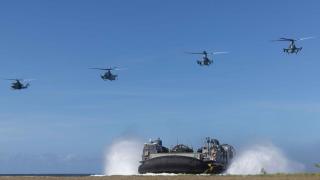
Last month, it went one step further, bombing a Venezuelan ship that was sailing in international waters and which, according to the Pentagon, was a drug transport that was going from Venezuela to the United States. Until eleven people may have died in the attackwhich Trump boasted euphorically from the White House.
Unrest among Spanish allies over the Nobel Prize for María Corina
If all this already indicated a complicated situation for Nicolás Maduro, isolated from the international community, with China and Russia as his only allies, and contested by his own people after 26 years of Chavismo, the awarding of the Nobel Peace Prize to his greatest rival, Maria Corina Machadodelves into his loneliness.
Machado, whose whereabouts are unknown to avoid her arrest, is the leader of the opposition although she cannot run in the presidential elections due to a judicial disqualification tailored to the regime.
His fight and bravery were awarded by the Nobel Foundation in what is a clear message from the West: not only is Maduro’s time over, but It’s time to recognize those who oppose him as heroesas has always been done with those who dissent from any dictatorship. To measure how bad things are for Chavismo, it is enough to observe its own reactions and those of its greatest defenders abroad.
While Maduro himself called for an emergency meeting of the UN Security Council in the face of what he calls “imminent military action” by the United States, his partners in Spain have come out to ignore Machado and shout to the heavens for the award they received.
For example, the founder of Podemos and former vice president of the government, Pablo Iglesiascompared the opposition leader to Adolf Hitler on social networks, while Gabriel Rufianleader of ERC in the Spanish parliament, joked that the prize was the equivalent of giving the Nobel Prize in Science – which does not exist – to the footballer Marcos Llorente, recent defender of the “chemtrails” theory.
Chavismo’s links with a certain Spanish left have been public and notorious, from Juan Carlos Monedero to Pablo Iglesias himself, passing through José Luis Rodríguez Zapaterowhose excellent relations with the Miraflores Palace have always been a source of criticism. Without going that far, in 2020, the Venezuelan vice president Delcy Rodriguez set foot on Spanish soil despite the prohibition of the European Union, with the consent, as has been known, of at least part of the government of Pedro Sánchez.
Russia’s stumbling block
In geopolitical terms, Trump’s harassment of the Maduro regime refers once again to the relationship between the United States and Russia. In fact, the request for an extraordinary meeting of the Security Council is addressed to the permanent representative of Russia at the UN, Vasili Nebenzia, who also currently serves as rotating president of the Council. To what extent they want Putin and Xi defend Venezuela It will depend on how quickly Trump follows through on his threats.
The American president has already shown little left hand in the past with traditional allies of Russia such as, for example, Iran. Although his personal relationship with President Putin is supposed to be excellent, he cannot obtain even a temporary ceasefire in his war with Ukraine and his frustration in this regard is notable.
This has led him to opt for a more aggressive approach to see if Putin begins to give up positions: after the loss of his influence in Syria, the Israeli and American bombings of Iran and the United States’ economic pacts with Armenia and Azerbaijan, Russia’s position in the world is increasingly irrelevant.
Can the Kremlin afford to lose another of its pawns? In principle, no. Venezuela is an energy power that, in Western hands, could supply Europe and specifically Ukraine, when one of the recurring Russian threats is precisely the cold. Now, the issue is what Russia can do, in its current situation, to defend Maduro.
Still a long road
Anyone who thinks badly can assume that if Trump didn’t care that Maduro ran drug cartels from 2017 to 2021 or that he subdued the opposition during that period, he probably cares about the same now. The difference, therefore, must be geopolitical. Trump is going to use the Venezuelan asset to put pressure on Russia and China. For the opposition, of course, that is better than nothing, but it should not set the bells flying either: Trump is unpredictable in every way and could well postpone the overthrow of Maduro as long as Putin and Xi give him something in return.
It is difficult to imagine a US military entry into Venezuela because it would go against the principle America First and because Chavismo has an army very prepared to oppose it. Another thing is that Maduro falls and, with his fall, the rest of the apparatus rolls behind him towards something at least resembling a democracy.