
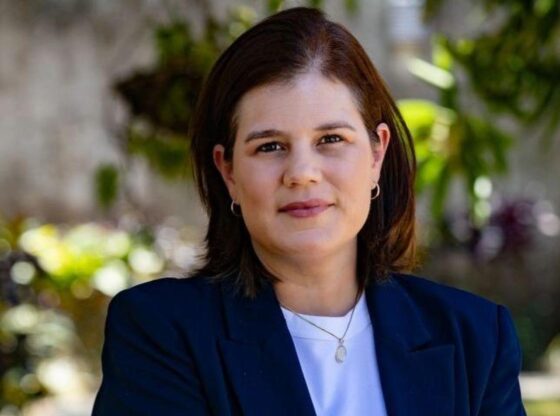

“It is a recognition of her dedication and that of the entire country. The entire team is overflowing with hope. This award is not only for María Corina, it is for Venezuela.” With a firm but excited voice, Paola Bautista de Alemána figure close to Maria Corina Machadocelebrates the 2025 Nobel Peace Prize, awarded to the Venezuelan opposition leader.
The vice president of training and programs of Primero Justicia speaks to us from outside the country, since she has an arrest warrant and was forced to leave Venezuela months ago. Bautista speaks with EL ESPAÑOL from the United States with the serenity of someone who has learned to resist even in the darkness.
“This Nobel is an unprecedented moral blow for the Maduro regime”he assures. “After years of persecution, prison and exile, the world finally recognizes the truth: that María Corina’s fight is the fight of an entire people for freedom.”
“The country raises its head again”
For Bautista, the award has an impact that transcends politics. “It is a moral empowerment of our cause,” he says. “For the first time in a long time, the country is raising its head again. People feel that they are not alone, that what they have suffered has been worth it.”
The Nobel Peace Prize thus becomes a banner of legitimacy for the Venezuelan opposition and for Edmundo González Urrutiathe president-elect, who is still awaiting official recognition from the international community. “The message is clear: the world does not believe the regime. And Venezuela, finally, is being heard again.”
Faith, symbols and signs: the Venezuelan saints
The recognition comes at a deeply symbolic moment: the canonization of the first two Venezuelan saints, scheduled for next week.
“Venezuela is a deeply Catholic country,” Bautista recalls. “The coincidence could not be more powerful. Just now that the Nobel Prize illuminates our cause, the Church canonizes Saint José Gregorio Hernández and Saint Carmen Rendiles. They are signs of hope.”
Saint Joseph Gregorio Hernandezknown as the doctor of the poor, has been a figure of national devotion for more than a century. A doctor, scientist and university professor, he dedicated his life to providing free care to those most in need, and died tragically in 1919 while taking medicine to a sick person.
His beatification in 2021 was celebrated as a popular festival throughout the country, and his canonization, awaited for decades, represents the culmination of a collective faith that has survived pain, scarcity and repression.
Santa Carmen Rendilesa nun from Caracas born in 1903, founded the congregation of the Servants of Jesus, dedicated to social service and education. Her silent life and her total dedication to others symbolize the strength of Venezuelan women: discreet, persevering and deeply supportive.
“The faith of the people cannot be extinguished,” he says. “That is why the regime does not know how to react to this coincidence,” he explains. “There will be a mass mass for more than 40,000 people. Neither censorship nor fear can prevent the country from celebrating this moment.”
“When faith joins freedom, no regime survives”
“The coincidence of the Nobel Peace Prize and the canonization is more than a coincidence: it is a sign. “María Corina represents the civic voice, and our saints represent the spiritual voice of the people. “Together they symbolize something that transcends politics: the dignity of a nation that refuses to surrender.”
While the regime remains silent, in the towns of Venezuela the bells ring and people pray. “The country is changing,” he says. “It may not yet be seen in the institutions, but it is felt in the streets, in the faith, in the eyes of the people, and when faith joins freedom, no regime can last forever,” he concludes.