

The keys
nuevo
Generated with AI
nuevo
Generated with AI
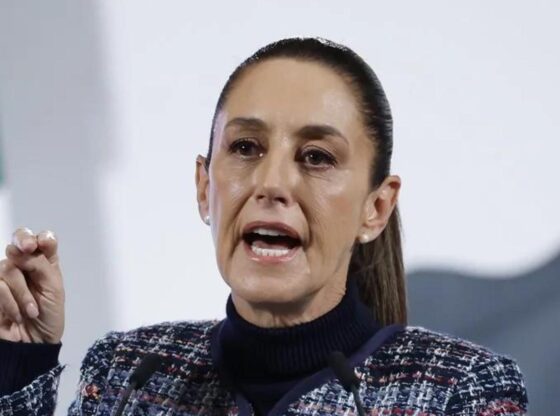
The president of Mexico, Claudia Sheinbaum, urged the United Nations (UN) this Wednesday to “assume its role” to avoid “bloodshed” in the face of the escalation of tension between the United States and Venezuela.
“Beyond opinions about the Venezuelan regime, about Maduro’s presidency, Mexico’s position must always be no to intervention (…) and a call to the United Nations to assume its role to avoid any bloodshed and to always seek a peaceful solution to conflicts,” he said.
The Mexican president’s statements, in her usual daily conference from the National Palace, come after US President Donald Trump announced a “total blockade” against sanctioned oil tankers entering and leaving the South American country.
Sheinbaum framed his position in the Mexican foreign policy doctrine and reiterated the principles of “non-intervention, foreign non-interference, self-determination of peoples and resolution of controversies.”
The president stressed that, in the face of international controversies, Mexico opts for diplomatic channels and not for forceful actions.
“We call for dialogue and peace to be used in any international controversy and not intervention,” he said.
For this reason, Sheinbaum emphasized the role of the multilateral system and asked that the UN intervene politically to contain the deterioration of the conflict.
The president also stated that, in her opinion, this role has not been visible in the recent episode, stating: “it has not been seen.”
This Tuesday, Trump announced the “total blockade” against sanctioned oil tankers entering and leaving Venezuela, in a significant escalation of the military operation that began in the international waters of the Caribbean that supposedly had as its central objective to combat drug trafficking organizations that operate in the region.
In his message, the president stated that “the illegitimate Maduro regime is using the oil from these stolen fields to finance narcoterrorism, human trafficking, murder and kidnapping.”
Following the presidential order, it is not clear how many oil tankers would be affected or what consequences such a measure would have for the Venezuelan oil industry.
Last week, the Southern Command of the United States Armed Forces, which since August has attacked more than 30 boats allegedly linked to drug trafficking in the Caribbean and the Eastern Pacific, took a turn in its operations in international waters by seizing the oil tanker Skipper, which was transporting Venezuelan crude oil near the coast of the South American country and was intercepted under a court order.
News in update
We are working on expanding this information. Shortly, the editorial staff of EL ESPAÑOL will offer you an update on all the data on this news.
To receive the latest news on your mobile phone, you can download our newspaper application to iOS devices and Androidas well as subscribe to access all exclusive content, receive our Newsletters and enjoy the Ñ Zone, only for subscribers.