

Arm sympathizers to organize a guerrilla war and cause anarchy and chaos in the streets. That would be the response that Chavismo would give to a possible ground attack by the United States, according to Venezuelan government sources consulted by Reuters.
The verbal and military escalation of the Trump Administration, which first put a price on the head of Nicolas Madurothen bombed the so-called “narco-boats” in international waters and even in the jurisdictional waters of Colombia and finally threatened to “move from the sea to the land”, has put the leaders of the Miraflores Palace on high alert.
In addition to appealing to the russian aidto which the Kremlin has publicly committed and which materialized in the sending of a gigantic transport plane to Caracas three weeks ago with unknown content, the regime is preparing to defend itself in a asymmetric war. Aware that conventional face-to-face combat is unfeasible against an army like the American one – “it would last two hours,” these sources affirm Reuters-, the idea is to turn the confrontation into a kind of Vietnam.
The anti-American psychosis has been a constant of Chavismo since the commander came to power in 1999, imitating the Castro model in Cuba, but it had never reached these extremes and it is worth wondering to what extent it benefits rather than harms Maduro. The excuse of an attack that has not yet arrived can actually serve to further militarize society, arm its supporters even more, and turn the “prolonged resistance” that is announced against the United States into an increase in repression against opponents.
The Secretary of State, in favor of military intervention
That said, and after a couple of months of intense pressure, both media and diplomatic, it is worth asking what are the real possibilities of an attack American against Venezuela. The Department of Defense (or War, as Trump now calls it) has sent some of its troops to train in the jungles of Panama, a strange and very unusual decision. It may be nothing more than a new tactical move to accentuate the threat or it may be that, in fact, the Pentagon considers that its soldiers need to train in conditions similar to those they would find in Venezuela.
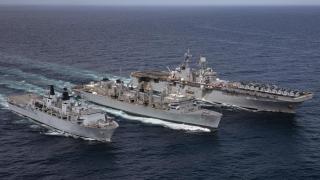
Besides, we have the clearly warmongering position of the Secretary of State, Marco Rubioand that of some senators such as the influential Lindsey Graham, a personal friend of Trump. The American president himself, as we have said, publicly expressed his willingness to move “from sea to land” in reference to the attacks on ships and the deployment of numerous warships in the vicinity of the Caribbean Sea. Now, later he said goodbye to those words and, in any case, let’s say that Trump is not the most reliable man in the world in his statements.
The arguments against it seem more powerful right now. At least, if we talk about a land intervention, be it by arming the Venezuelan opposition, in the style of what happened in the Bay of Pigs in 1961, or with the entry of the US army to behead the regime as happened in Panama with General Noriega in 1989 under a similar excuse: his links to drug trafficking.
The first thing to keep in mind is that Trump came to power with the promise of abandoning military missions abroad and replacing war with trade. Very powerful voices in the MAGA movement have criticized the White House’s position in this conflict and, if he reaches Congress, where in principle any military intervention must be authorized, Trump would probably not reach the necessary majority.
Russia’s support and the lessons of history
The geopolitical issue also plays an important role. Since coming to power, Trump has collided with Russian interests by maintaining arms sales to Ukraine, bombing Iran’s nuclear facilities and legitimizing the new Syrian government while the deposed Al-Assad remains in exile in Moscow. No matter how much he boasts of friendship with Putin, an attack on Venezuela and the overthrow of the Chavista regime It would be straining the rope too much..
Venezuela and Russia have a privileged relationship economically and diplomatically. Maduro is always willing to give him his vote in the UN and exchange weapons for oil. It doesn’t matter that these weapons are from the Soviet era or that they are in poor condition, the point is to do business while its population lives in absolute hunger. Neither Moscow nor Beijing would welcome losing such a relevant partner. What remains to be seen is how far they would go to defend their ally. In Syria and Iran, for example, they did not lift a finger.
The lessons of history do not help us think about a land military intervention either. It didn’t go well in Iraq, it didn’t go well in Afghanistan, and it certainly didn’t go well in the Bay of Pigs or Vietnam. The overthrow of Noriega was child’s play compared to what can happen if troops are put into the Venezuelan hornet’s nest. At most, one could think of a strategic bombing of certain military and political objectives. And yet, that could be considered too risky.
In short, the war game can be prolonged indefinitely without it being clear if the external threat helps Maduro in the midst of internal turbulence or if, on the contrary, the actions of the US spy services can find cracks in what seems like total support from the army. Be that as it may, it would be better to stop playing Pedro and the wolf and decide one way or the other. Clarity is always the best traveling companion in international affairs, something that Trump does not seem to share at all.