

With simple irony, YouTube can materialize Pablo Picasso’s famous maxim about his artistic research: “I don’t look for it, I find it.” Looking for one thing and finding another, this is what can be rewarding, sometimes fun, even to make us resist the (mis)information that tries to convince us that journalists, “in real time”, have the keys to deciphering everything that happens – in this regard, I still don’t know what “unreal time” will be.
The other day, far beyond what I was looking for, I found an interview with Umberto Eco (1932-2016), on the French television program “7 Sur 7”, with Anne Sinclair. As often happens on YouTube, I knew an extract, but had never accessed the full duration of the interview. Speaking about what could be a new “mass culture”, Eco recalls that, “a few dozen years ago, there was discussion about what the role of the media could be in the world.” Now, something changed: “Now, the media are the world. Before, the media they talked about the world, now the media talk about media (we are talking here about media) and the world lives to be able to enter the media.”
Is there a subtle humor in this description? None of that: “I’m not kidding”, explains Eco. And he adds: “Everything happens as if the entire planet had become an object for the production of news and spectacle through the media. We live in it like ghosts.” Ultimately, we are faced with “a religion being remade”, since “divinity itself has become electronic.”
One could say that Eco was describing the intellectual and discursive misery in which Portuguese political life came to exist. This is not a question, understand, of denying the merits of the truly brilliant personalities who punctuate this life. It turns out that everyone tends to be involved (and, in some way, equalized) in the same television addiction. Practical result: it has become almost impossible to talk about politics on television. Most “analysis” programs tend to be organized as an automatic reflection (in a loop) of what the television space broadcast the day before or, without exaggeration, a minute before. “Speed” became a divine value.
The timeliness of Eco’s words is all the more disturbing as the conversation with Anne Sinclair was broadcast more than thirty years ago, on TF1, on June 17, 1990. This means that there are political universes that, submitting to a rudimentary media religion, have frozen in the convulsions of history in which some “analytical” journalism has imprisoned them.
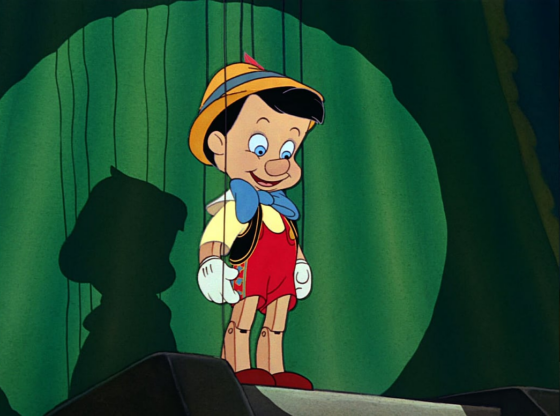
How to get out of this impasse? Eco does not have, nor does it intend to have, miraculous solutions, but it does not fail to say, implicitly, that it is important to discuss (not demonize, but really discuss) the assumptions of this journalism. It is Anne Sinclair herself who remembers him when she says that someone, a representative of that journalism obsessed with its lazy formatting of ideas, asked him why he had chosen the title The Name of the Rose for one of his novels. Eco’s response could not be more enlightening: “Pinocchio was already taken”.
Journalist