
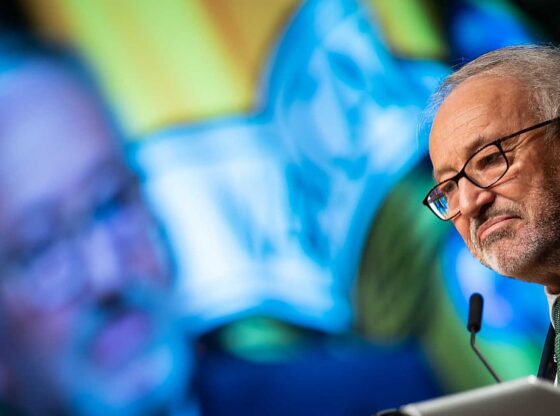

According to the mayor, within the scope of local finances and the participation of local authorities in State taxes, the global amount of the general subsidy for parishes was set in the OE2026 proposal at almost 406.7 million euros (ME), an increase of just 10.1 ME compared to the previous year.
The amount foreseen for the parishes of Lisbon, of 87 ME, also registered an increase of 1.9 ME, a value “much lower than the increase” recorded in 2025, which was 3.7 ME, and “manifestly insufficient to ensure the exercise of all powers” of these municipalities and their staff costs, he said.
Jorge Veloso also criticized the rule that sets at just over 41 million euros the amount to be allocated for remuneration and other charges for parish council presidents who have opted for full-time or part-time employment.
“In other words, the proposal, under consideration, not only does not provide for any increase in the amount allocated to the payment of salaries to local elected officials in the parish, but it does not even consider the fact that the disaggregation of parishes has given rise to a greater number of parishes and, consequently, local elected officials”he added.
The parish association also regretted that “no information had reached Anafre, until this Thursday, that would allow the opening of notices for applications” of parishes to PT2030”, a measure to which the Government has committed.
Jorge Veloso highlighted that this is the third year that Anafre has presented an unfavorable opinion and continues to maintain the same proposals that it has presented in recent years.
“What does that mean they didn’t listen to us”these.
As in previous years, Anafre proposes that the parishes’ contribution rate to the urban IMI be increased from the current 1% to 3%.
Among other measures, Anafre also proposed a 50% increase in fees charged in citizen spaces and the exemption from VAT for activities carried out by parishes, similar to what happens with private social solidarity institutions (IPSS).
“There are parishes whose VAT payment is higher than what they receive from the parish financing fund. This was presented to us in Congress, in Figueira da Foz, and we later found out that this is true. Therefore, this issue of VAT, at least, that there are some exception rules here, just like what is done for IPSS, for example”concluded Jorge Veloso.