

In 2009, Brazilian funk singer MC Orelha dedicated a song to one of the most powerful criminal organizations in Brazil. In it he described how the Red Command operates: “In the Gaza Strip there are only bomb men, in war it is all or nothing. Multiple titanium weapons on the chest, bulletproof vest.” The singer’s verses, which combine references to the Middle East conflict and violence in the favelas, summarize the reality of an urban war that, more than a decade later, continues to mark life in Rio de Janeiro.
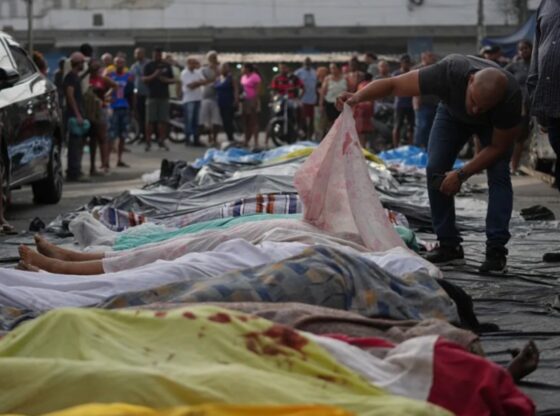
This Tuesday, a police operation against the Red Command claimed the lives of almost 150 civilians and four police officers, in addition to dozens of detainees and an arsenal of seized weapons. “Operation Containment”, which mobilized more than 2,500 agents, turned – once again – the Alemão and Penha complexes into a scene of urban combat, with streets blocked, buses diverted and schools closed.
When did the organization emerge?
The Vermelho Command (CV) is a Brazilian criminal organization that originated in the Rio de Janeiro prison system in the 1970s. Considered one of the oldest and most powerful factions in the country, it operates mainly in drug trafficking, weapons and other illicit activities. Unlike a group with centralized leadership, the CV works as a decentralized network composed of different owners of the hill -the local leaders- who control territories within the favelas.
Its structure has several hierarchical levels. The fronts are responsible for drug sales points, managers manage finances and soldiers y vapors They execute orders in the streets of Rio. The organization is financed through drug trafficking, extortion and parallel activities such as animal gamean illegal popular lottery that also serves to launder money. Part of the resources is allocated to a common fund that supports imprisoned members and their families, reinforcing their social control in communities where the State has little or no presence.
In parallel, the Red Command maintains its own justice system, known as crime courtthrough which both members who fail to comply with internal rules and people accused of crimes – from internal conflicts to complaints raised by the community – outside the legal framework of the State are judged and sanctioned. This system includes hearings in which witnesses are heard and sentences are handed down that can go up to execution, with their own coercion and punishment mechanisms.
The prison origin
Under the motto “peace, justice and freedom”, the Red Command emerged in the Cândido Mendes prison, on the island of Ilha Grande, at the end of the seventies. The prison, known as the hell on Ilha Grande o Calderon of hellwas known for overpopulation, food shortages, poor hygienic conditions and temperatures that exceeded 50 degrees in summer.
During the Brazilian military dictatorship, when the regime decided to mix political prisoners with common criminals with the aim of depoliticizing the militants, the measure had the opposite effect and political prisoners taught criminals to organize and resist.
William da Silva Lima, known as Teacher and one of the founders of the CV, described in his book 400 against one that inside that prison “the only thing left was to organize or die.” From this idea arose the Falange Vermelha, which later became the Comando Vermelho, referring to the blood spilled in prison.
In the following decade, with the expansion of cocaine trafficking, The CV turned drug trafficking into its main source of income. From the favelas in the northern area of Rio – Alemão, Penha, Jacarezinho – a decentralized model was structured in which each person in charge controls their territory autonomously, managing points of sale, finances and weapons.
Areas of influence
Currently, the Red Command controls more than 50% of the areas dominated by criminal factions in the metropolitan region of Rio de Janeiro, but its influence has extended far beyond. It maintains a presence in at least 25 Brazilian stateswith special strength in the North and Northeast regions. There it operates through networks of franchiseswhere local leaders manage drug and weapons trafficking, and dispute strategic routes in the Amazon with other organizations, such as the Primeiro Comando da Capital (PCC) of São Paulo.
At the international level, the Red Command has established connections with drug cartels from neighboring countries – mainly Colombia and Bolivia – and has tried to access European and American markets. Although its action outside Brazil is indirect, it maintains alliances with local criminal groups to facilitate trafficking and money laundering.