
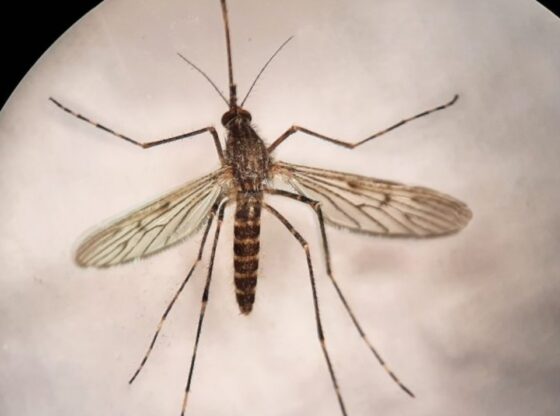

Icelandone of the few places free of mosquitos of the Earth is no longer a refuge from the annoying bites of these insects. For the first time, these mosquito animals have been found in this cold country. Matthias Alfredssonan entomologist at the Icelandic Institute of Natural Sciences, has reported that three mosquitoes, two females and one male, have been found about 30 kilometers north of the capital, Reykjavík.
“They were all found on wine ropes intended to attract moths,” said the researcher, referring to a method that involves adding sugar to mulled wine and submerging ropes or strips of cloth in the solution, which are then hung outdoors to attract insects. They were all of the species Slide canceledhe detailed.
Iceland, along with Antarcticahas long been one of the few places on Earth without a mosquito population.
“It is the first record of mosquitoes that occur in the natural environment in Iceland. Many years ago a single specimen of Aedes nigripes (species of arctic mosquito) from a plane at the airport Keflavik“Alfredsson specified, adding that “unfortunately, that copy was lost.”
A mosquito from the Culiseta annulata species.Guadalquivir Mosquito Observatory
According to the researcher, the presence of mosquitoes could “indicate a recent introduction to the country, possibly through ships or containers.”
He added that the mosquitoes could potentially spread across the island, but that additional monitoring would be needed in spring to determine if they “really established themselves in Iceland.”
He climate changewith rising temperatures, long summers and milder winters, creates a favorable environment for mosquitoes to thrive.
But Alfredsson has stressed that the warmer climate is probably not the reason for the appearance of mosquitoes in Iceland. “This species appears to be well adapted to cold climates, mainly due to its ability to hibernate as an adult in sheltered places. This allows them to withstand long, harsh winters when temperatures fall below zero,” he explained.
The species, which is found in everything Europa“also utilizes diverse breeding habitats, further strengthening its ability to persist in Iceland’s challenging environment.”