
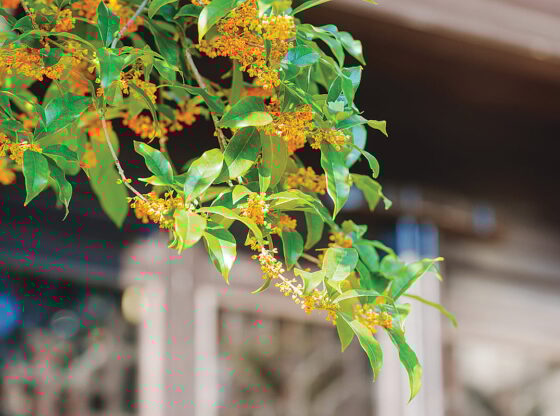

Osmanthus usually blooms around the Mid-Autumn Festival (on the fifteenth day of the eighth lunar month), exuding an intense perfume. In China, it symbolizes family reunion, prosperity and abundant harvest. Its aroma is believed to bring good luck, which is why it is often used to make cakes, teas and perfumes. In Chinese, “guì” (osmanthus) is a homophone of “guì” (wealth, nobility), so the flower is also associated with the idea of fortune and distinction. In the West, osmanthus is little known, and its sweet fragrance tends to evoke a certain oriental exoticism.
As for the narcissus, it is a flower that blooms in spring, with a fresh fragrance and soft colors. In China, as it blooms around the Lunar New Year, it is also called “flower of the year”, being a symbol of renewal and new omens. The narcissus is also an important motif in traditional Chinese painting of birds and flowers, often appearing together with the plum tree, symbolizing purity and integrity of character. In the West, this flower is associated with the Greek myth of Narcissus, the young man in love with his own reflection, being interpreted as a symbol of introspection and rebirth.
China’s ten most celebrated flowers are not only masterpieces of nature, but also living symbols of Chinese culture. Each of them tells poetic stories about virtues and feelings, reflecting the values held dear by the Chinese people throughout history. At the same time, its symbolic meanings often find echoes in Western culture, creating a floral language of beauty shared between East and West.
To discover more fascinating content about Chinese history and culture, follow our Instagram and Facebook page at “Glimpses of China”.