
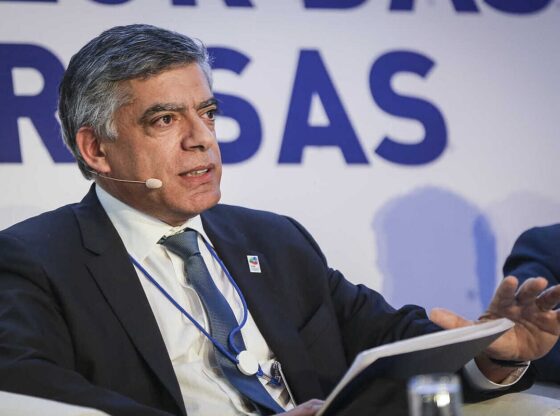

The Portuguese Business Confederation (CIP) considers the 4.5% increase in spending to be “worrying”. which, he says, contrasts with the downward revision of the growth of the Portuguese economy. This is how the confederation led by Armindo Monteiro reacts to the proposed State Budget Law for 2026 (OE2026) delivered this Thursday, 9th, in Parliament.
In the document, the Government reviews economic growth for this year downwards, pointing to 2%, a cut of 0.4 percentage points. For 2026, the Executive’s forecasts indicate an acceleration to 2.3%.
“Our country has had almost anemic growth rates, always well below our potential, recording, however, very significant increases in the value of current expenditure. There is an urgent need to integrate more vigorous measures into the OE2026 to increase the country’s productive capacity, make the business fabric more sophisticated and provide our economy with new competitiveness factors”, argues CIP in a statement.
The confederation regrets that the document presented by the Minister of Finance increases expenditure and does not identify “savings resulting from the vigorous fight against waste“, arguing that “growth and prosperity will necessarily have to become pillars of an economic policy capable of standing alongside” its European counterparts.
Still on the negative notes, the CIP raises the red card to the “erosion of net wages” arguing that the updating income brackets in the IRS table by 3.51% in 2026 is “below what is necessary to ensure fiscal neutrality”.
“There is a slight decline in IRS rates between the 2nd and 5th brackets. It should be noted that in the context of the tripartite agreement on income and economic growth, signed at the CPCS, the reference for an increase in the SMN for 2026 is 5.7% and the average salary aims for a growth of 4.6%”, he adds.
On a more positive reading, the CIP praises the increase in public investment by 6.8% and the relief of the tax burden “although this relief is being carried out very slowly”, he considers.
In the same reaction, also emphasizes the preservation of the balance of public accounts“allowing the continuation of the public debt reduction trajectory, although at the expense of increasing revenue and not expenditure.”
Finally, it is hoped that the discussion on the specific nature of the Government’s proposal will see the approval of measures of a fiscal nature such as the General Regime of Fees and Contributions, a 15th month “without its current limitations to its potential”, and measures to stimulate the second pillar of Social Security.
“The country needs this instrument of macroeconomic and financial guidance, which continues budgetary consolidation, implements the PRR, alleviates the tax burden, improves salaries, preserves the social functions of the State, reduces asymmetries and continues to converge with Europe, among many other important challenges. This is in addition, of course, to gaining greater strength to deal with international turbulence”, he concludes.