
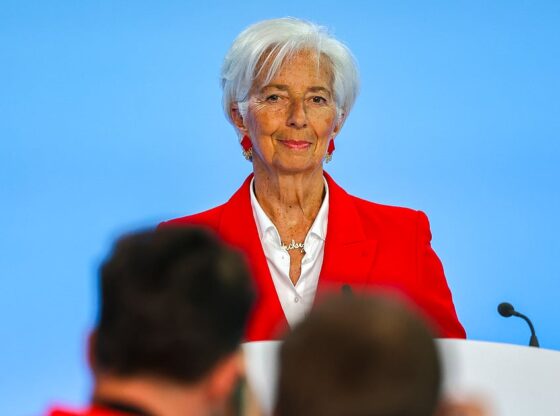

The president of the European Central Bank (ECB), Christine Lagarde, predicted this Tuesday, 4th, in Sofia that the adoption of the euro in Bulgaria on January 1st will bring “prosperity and security” to the Balkan country, the European Union’s (EU) poorest partner.
“The adoption of the euro brings two key benefits to Bulgaria: prosperity and security”, assured Lagarde to the participants of the conference entitled ‘Bulgaria at the gates of the eurozone’.
In her intervention, the head of the ECB defended the advantages of the single European currency in the face of skepticism and even rejection that, in surveys, expressed by just over half of the Bulgarian population.
According to his analysis, the fear of a possible loss of sovereignty, as well as an increase in the cost of living, are the main concerns that the arrival of the euro awakens among citizens.
In view of this, he claimed that, given that Bulgaria has already maintained a fixed exchange rate for a long time, “the costs of giving up an independent monetary policy are minimal”.
Regarding inflation, Lagarde recalled that “in previous transitions to the euro, the impact was between 0.2 and 0.4 percentage points.”
Despite this moderate increase, Lagarde estimated that, over time, confidence in the European currency will grow in the country’s homes and companies, as happened in other nations in the euro zone.
For Lagarde, the benefits that await them are, instead, “substantial”, with “more fluid trade, lower financing costs and more stable prices”, advantages that, over time, should strengthen small and medium-sized companies in particular.
Furthermore, the euro increases the country’s resilience in the face of global crises “and amplifies its voice in decision-making in the euro zone, thus strengthening its sovereignty”, he highlighted.
The introduction of the single currency implies a deepening of the integration process that Bulgaria began with its accession to the European Union (EU) in 2007, he recalled.
In the last decade, Bulgaria’s Gross Domestic Product (GDP) per capita rose from one third of the euro zone average to almost two thirds today, a “success” that, for the ECB president, is “firmly based” on the steps taken towards greater integration with other EU and euro zone countries.
“Today, 65% of Bulgaria’s exports are destined for other EU countries and 45% for eurozone countries”, highlighted Lagarde.