
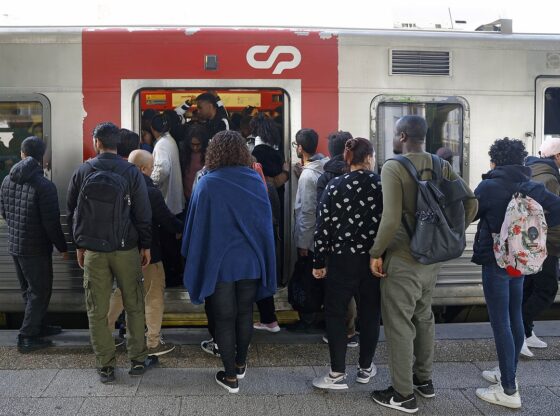

The acquisition of 153 new trains by CP will allow it to renew 35% of the passenger rail carrier’s rolling stock, ensuring “a better public service”, the Ministry of Infrastructure said today.
The information was detailed in a written response to Lusa, after the signing of the contract between CP – Comboios de Portugal and the Alstom/DST consortium for the largest purchase of railcars ever from the carrier, worth 746 million euros, which covers the 117 units initially planned plus 36 additional ones whose purchase option CP was mandated to activate.
According to the ministry led by Miguel Pinto Luz, the unit value of the 36 additional railcars “is identical to that of the other units intended for urban service”, which now totals 98 (initially 62) and which are intended to “renew the fleets for services on the Cascais, Sintra, Azambuja, Sado and suburban Porto lines (Aveiro, Braga, Guimarães and Douro/Marco de Canaveses)”.
The remaining 55 units are intended for regional service and will cover the entire territory.
“The trains will leave Barcelona and Guifões [Matosinhos]according to the contract, from the first quarter of 2029 and during the subsequent 40 months”, said the Government, in other words, the scheduled date for the start of deliveries remains, but CP is “working hard to get the manufacturer to anticipate” the remaining ones until the total of 153 railcars is reached.
“This process is ongoing, so the respective expenditure authorization will be granted as soon as it is completed”, said the Ministry of Infrastructure.
At stake is CP’s largest purchase ever, awarded to the consortium led by French manufacturer Alstom for 746 million euros and challenged in court by competitors CAF and Stadler.
As Lusa reported, on September 9, CP confirmed that the suspensive effect of a second challenge to the public tender, presented by the Spanish CAF, had been lifted. In July, the suspensive effect of a first challenge, presented by the Swiss Stadler, had already been lifted.
It is also planned to install a train factory in Matosinhos (Porto district), which, according to the company, would represent around 300 direct jobs and 1,500 indirect jobs.