

How important is cochinita pibil to Yucatan cuisine? Has it existed for many centuries?
Cochinita pibil is the symbol of Yucatán gastronomy. Its history, culture, tradition and cultural heritage date back to the golden times of the Mayans, when they prepared their stews with annatto and in a “buried” way. It was not exactly cooked with pork, since pork was introduced by the Spanish during colonization, but it was already consumed with venison, pheasant and fish.
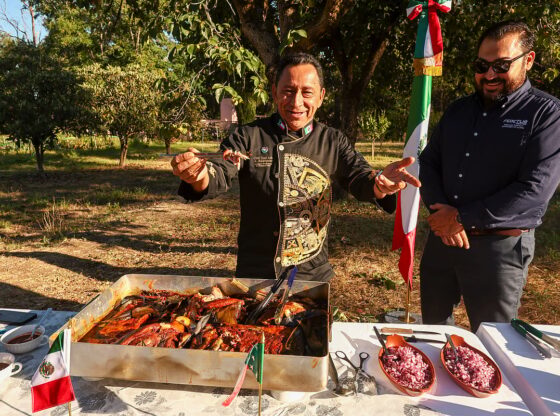
For the first time, a 100% authentic cochinita pibil was made in Portugal, “buried” in the garden of the Mexican embassy in Lisbon. How did the idea come about?
As Yucatecos, we are proud of our cuisine and always want to share it with the world. We believe that everyone on the planet should try the delicacies of the Mayan people at least once in their life. The idea of bringing “buried” cochinita to Portugal came from conversations with ambassador Bruno Figueroa, his dear wife Verónica and our president of FEDETUR, the Yucatán tourism federation, Frank Sosa Candila. The opportunity to offer this authentic and unique culinary experience on Portuguese and European soil for the first time fascinated them from the beginning. The excitement was so great that the news was shared with other Portuguese cities. We are planning a gastronomic and cultural festival in the city of Guarda in May 2026, together with the Instituto Politécnico da Guarda and the embassy.
As you mentioned, before the Spanish introduced pork to Mexico in the 16th century, meat was already cooked “buried” or “in the hole”. Were they mainly birds?
We used birds such as pheasant, deer, armadillo and even fish, in an exquisite way, with all the ingredients that nature provided us.
How did the name “Maia Prince”, of which you are so proud, come about?
The name “Maia Prince” was created to honor our Mayan warriors. Few of us still preserve the ancestral methods of cooking with smoke, wood and fire.