
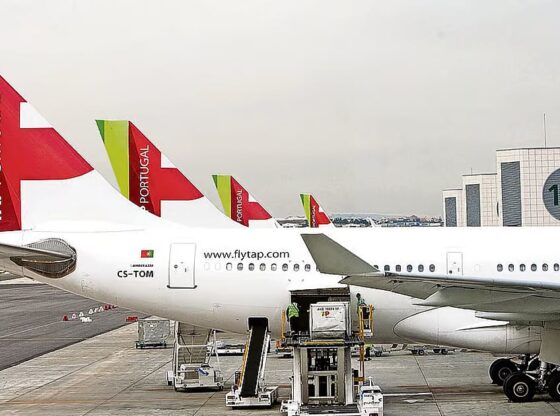

The financial rating agency S&P maintained TAP’s rating at “BB-/stable”, but warned of a decline in operating profits in 2025 and uncertainties linked to the privatization process of the Portuguese airline.
In the most recent note, S&P predicts that TAP’s operating profit before interest, taxes, depreciation and amortization (EBITDA) will fall to between 680 and 700 million euros this year, compared to 852 million euros recorded in 2024, due to pressure on air fares paid by passengers and the impact of the 20-day strike by pilots at Portugália, the regional subsidiary of group.
The agency attributes the drop in operating profits mainly to the intensification of competition, particularly on transatlantic routes, which has compressed the average ticket price.
S&P estimates revenues of between 4,250 and 4,350 million euros for 2025 and an EBITDA margin of 16% to 17%, below the 20% of the previous year.
Despite the slowdown in operating results, the agency considers that TAP should maintain financial ratios “compatible with the current level of credit”, with the debt to EBITDA ratio being between 4.0 and 4.5 times.
According to the same note, TAP is expected to transport up to 17 million passengers in 2025, 900 thousand more than last year, supported by the expansion of the network and the opening of new routes outside Lisbon. The average occupancy factor rose to 85% in the second quarter, compared to 82.7% in the same period of 2024.
One of the main points of attention in the report is the company’s privatization process, which, according to S&P, could change the perception of financial support from the Portuguese State – an element that has been decisive in the assessment of the carrier’s credit risk.
The agency emphasizes that maintaining a stable outlook “depends on the hypothesis that privatization does not change the assessment of the moderate probability of extraordinary financial support from the Government”.
Although the sale process does not automatically imply a change in rating, S&P warns that any sign of weakening of this perception of public support, or a possible drop in Portugal’s sovereign rating below “BBB-”, could lead to a downward revaluation of TAP.
Among the risk scenarios, S&P admits a ‘downgrade’ if the ratio between funds generated and debt (FFO/debt) falls below 12% and remains at that level for an extended period. A sustained improvement in results and ratios above 20% could justify an upward review of the rating.
The agency classifies TAP’s liquidity as “adequate”, with financing sources that cover three times needs until mid-2026, including 1,167 million euros in cash.
On the other hand, S&P once again highlights that environmental and social factors continue to weigh negatively on the company’s assessment, due to growing European requirements for reducing emissions and the impact of the gradual end of free carbon allowances under the “Fit for 55” package – the set of European Union measures that aims to reduce net greenhouse gas emissions by at least 55% by 2030.
TAP’s privatization specifications provide for the sale of a stake of up to 44.9%, with 5% of the capital reserved for workers.
According to the calendar, candidates must send their declaration of interest to Parpública, manager of state holdings, by November 22nd.
The Government expects the process to be completed within a year, depending on authorizations from Brussels.
So far, Air France-KLM, IAG and Lufthansa have been the airlines that have publicly expressed their interest, but the privatization process is also open to potential investors outside Europe.