

Carney has already stated that he is ready to resume trade negotiations “as soon as the Americans are ready”, implying that bilateral discussions have made progress.
“We are ready to continue on this path and take advantage of this progress when the Americans are ready,” he said.
Canada is one of the United States’ main trading partners, but relations between the two countries have cooled since Trump started a trade war against Washington’s commercial allies and expressed a desire to annex the northern neighbor after returning to the White House in January this year.
Approximately 85% of cross-border trade remains tariff-free as the United States and Canada are members of the North American Free Trade Agreement.
But Trump’s global sectoral tariffs, particularly on steel, aluminum and automobiles, have hit Canada hard, leading to job losses and putting companies under pressure.
Last September, the US Supreme Court agreed to quickly review the legality of most of the tariffs imposed by Trump, a case that the President himself considers “vital” to maintain the increase in tariffs and move forward with his economic program.
The Supreme Court is expected to hear arguments in early November about whether the Trump administration can use emergency economic powers to impose the largest tariff increase in the country’s recent history.
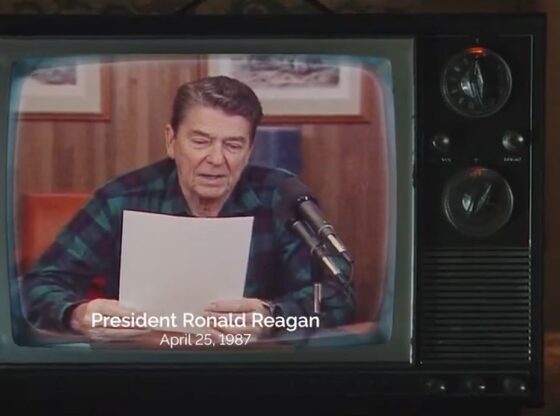
This Friday, Trump repeated the accusations against the Canadian government, based on a television advertisement that he called fraudulent promoted with words from former Republican president Ronald Reagan (1981-1989) against taxes, something that, according to Trump, was taken out of context.
“Canada cheated and was discovered. […] Canada is trying to illegally influence the United States Supreme Court in one of the most important rulings in our country’s history,” Trump wrote on his Truth Social network.
Donald Trump was referring to the advertising campaign financed by the Canadian province of Ontario, worth around 75 million dollars (around 64.5 million euros), with the aim of convincing North American Republican voters, according to several media outlets.
The Ronald Reagan Foundation stated on the social network
According to the foundation, the advertising distorted the words of Ronald Reagan (1981-1989), adding that he was “examining his legal options in this case”.