
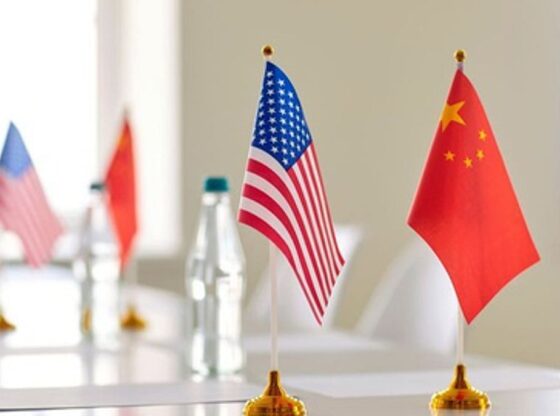

The Asia-Pacific Economic Cooperation (APEC) summit kicks off this week in South Korea, with attention focused on the meeting between Donald Trump and Xi Jinping and efforts to halt a new trade escalation between Washington and Beijing.
The meeting between the Presidents of the United States and China is scheduled for Thursday, on the sidelines of the summit that will take place in Gyeongju, South Korea.
Trump even left the holding of this meeting in doubt, in a context of trade tensions between the United States and China, but it will happen after all, and it will be the first at bilateral level since 2019.
Washington and Beijing have returned to exchanging punitive tariffs and export control measures in recent months, fueling fears of a new wave of tension between the world’s two largest economies.
The White House (US presidency) imposed tariffs on Chinese goods and limited semiconductor exports, while Beijing retaliated with tariffs and announced broad restrictions on the export of rare metals.
On the eve of the meeting, the two countries reached a preliminary understanding in areas such as agricultural trade, rare earths, fentanyl, the application of tariffs and the future of the TikTok application, of Chinese origin.
United States Treasury Secretary Scott Bessent described the talks as “constructive, in-depth and broad in scope”.
He also said that the two sides established a “very positive basis” for the meeting between the heads of state.
The Chinese delegation, led by Vice Premier He Lifeng and trade negotiator Li Chenggang, described the dialogue with Bessent and US Trade Representative Jamieson Greer as “frank, in-depth and constructive”, according to a statement from China’s Ministry of Commerce.
The trade war between China and the United States dates back to January 2018, when during his first presidential term, Donald Trump began imposing tariffs and other trade barriers on China with the aim of forcing Beijing to change trade practices considered unfair by Washington and rebalance the trade balance.
Trump’s return to the White House earlier this year resulted in a rapid escalation of disputes, with the imposition of significant tariffs by both parties.
Last March, the United States imposed a 145% tariff on Chinese products, while China responded with a 125% tariff on American products.
The two countries then adopted a truce and partially reduced rates, aiming to begin negotiations that have been going on for months.
During the latest negotiations, China agreed to postpone the entry into force of some of its new rare earth export licenses for a year and to reevaluate the regime.
The Trump administration, in turn, signaled the extension of the current tariff truce, which expires on November 10th.
The United States indicated that in negotiations that preceded the meeting between Trump and Xi, China agreed to resume “substantial” purchases of North American soybeans, after having practically suspended imports this year.
The agricultural sector, especially soybean producers, represents one of Trump’s electoral bases.
In parallel, Washington and Beijing announced that they had reached a final agreement on TikTok’s shareholder structure. This is the only concrete result of the negotiations held last month in Madrid.
Meanwhile, Trump has taken advantage of his first visit to Asia since returning to the White House to strengthen alliances and launch new commercial partnerships.
In Malaysia, he presided over the signing of agreements with Phnom Penh and Bangkok and claimed to have brokered a ceasefire between Cambodia and Thailand, following border clashes that occurred in the summer.