
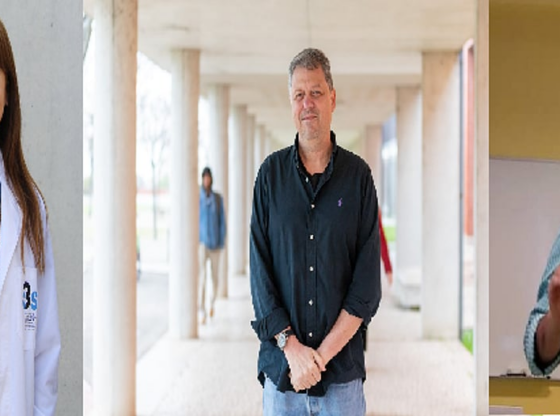

Portugal once again stands out in European science. Two consortia comprising Portuguese researchers won prestigious ERC Synergy Grants, grants worth 10 million euros awarded by the European Research Council (ERC): one of them, the RODIN projectcould help revolutionize regenerative medicine and personalized therapies, through development of biomaterials capable of interacting very efficiently with human cells; the other, o CenAGE, proposes to investigate the role of centromeres, hitherto little explored regions of our DNA, in the aging process, which could help open the door to new therapies for age-related diseases.
Synergy Grants are one of the categories of grants established by the ERC, the European Union’s main organization for funding cutting-edge research, and aim to support interdisciplinary collaborative projects between excellent researchers, capable of generating disruptive scientific and/or technological innovation. In this edition, only 66 projects were selected, out of 712 applications – and two of them distinguish Portuguese science.
Understand and replicate how cells shape their environment
The RODIN (Cell-mediated Sculptable Living Platforms) project is led by a consortium that includes Portuguese researchers João Mano, from the Associated Laboratory CICECO – Institute of Materials of Aveiro, from the University of Aveiro, and Nuno Araújo, from the Faculty of Sciences of the University of Lisbon, as well as the Englishman Tom Ellis, from Imperial College London.
The team proposes an innovative approach to the science of biomaterials, starting from the idea of cells as the true architects of life. This project wants to understand and reproduce the way living cells shape their own environment, and use this knowledge to create intelligent and dynamic materials that can interact with cells in a similar way to what happens in human tissues.