

FEW people have come face-to-face with the perpetrators of some of the world’s worst massacres – but leading forensic psychiatrist Paul Mullen has.
Over decades living and working in Australia and New Zealand, British-born Paul, now 81, has interviewed and assessed some of the region’s most notorious lone mass killers – men who, between them, have carried out devastating attacks that killed dozens.

21

21

21
He has had the rare opportunity to study them and compare their stories to others across the globe, which he writes about in his new book, Running Amok.
Unlike in America – where police often kill the perpetrators – or in Britain, where they often take their own lives, many of these killers have survived in Australasia.
What Paul discovered is that, despite different backgrounds, there are also some disturbing similarities.
He found that the overriding motive was a desire for suicide – but not an ordinary one. These killers wanted to die in a way that made them remembered.
He was tasked with assessing Martin Bryant, who murdered 35 women and children at Port Arthur, Tasmania, in 1996.
Paul tells The Sun: “I saw the Port Arthur killer less than 48 hours after the killings and he just smiled at me and said, ‘I’ve got the record, haven’t I?’
“I didn’t have to ask him, ‘What record?’. He meant he had killed more people than any single lone gunman killer had ever done before that time. He knew because he had studied them.”
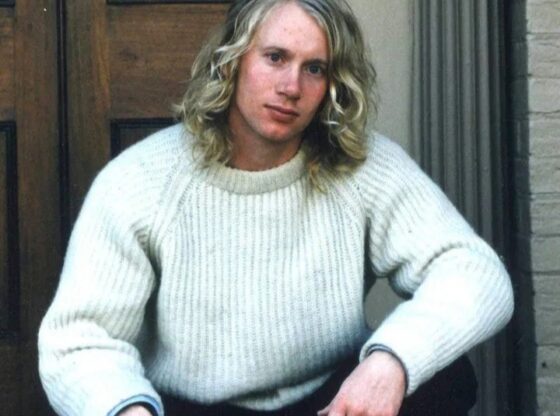
The young blonde-haired man – who drove a yellow Volvo with a surfboard on top – was strapped to a hospital bed at the time.
He’d been badly burned when he set fire to the guesthouse where he was eventually captured, thwarting his original plan to end his life.
Bryant’s “record” has since been tragically surpassed by massacres including the 2016 Nice truck attack, the 2017 Las Vegas shooting, and the 2019 Christchurch mosque killings.
Yet the lonely 28-year-old, with a low IQ, spoke in detail to Paul about previous massacres that inspired him.
He included the 1966 University of Texas shooting by mature student Charles Whitman, which became the “original model” for many later killers.
Paul says: “These people, armed with the intention of killing as many people as they can before dying themselves, are seeking a form of suicide that, in their view, will make them famous and feared.
“They want to go out in a blaze of glory, not as a wimp, but as some kind of hero. They hero-worship those who’ve done these acts before.
“In a strange way, they’re searching for fame, immortality – and their own death.”
‘Treated guns like babies’

21

21

21
Paul repeatedly found that a deep attachment to weapons lay at the centre of these men’s lives.
Thomas Hamilton, 43, who killed 16 children and their teacher at Dunblane Primary School, Scotland, in 1996, was heavily involved in gun clubs.
Paul says: “He was absolutely fascinated by guns. He belonged to more than one club and people hated him because he wouldn’t stick to the rules.
“One member said he treated his guns like babies.”
They want to go out in a blaze of glory, not as a wimp, but as some kind of hero. They hero-worship those who’ve done these acts before
Paul Mullen
The students behind the 1999 Columbine High School massacre were also keen shooters, with access to a variety of guns.
They even filmed themselves target shooting before the atrocity.
Historically the University of Texas shooting was another example of a killer obsessed with firearms.
In 1966 Charles Whitman, a 25-year-old former marine and student, climbed to the top of a 90-metre-high tower on campus in Austin and opened fire with a sawed-off shotgun.
He killed 15 people and injured 30 more. He had also murdered his wife and mother earlier that day.

21

21

21
Although Paul does not reference him in his book, there are chilling echoes in more recent cases, such as that of British teenager Nicholas Prosper.
Last year Prosper shot his mother and siblings in Luton and had told police of a “Friday the 13th” plan to attack his school – a threat that, if carried out, could have been even deadlier than Sandy Hook.
He also filmed himself mimicking shooting with a piece of wood, showing a clear obsession with guns.
In Paul’s experience, guns are not just instruments of violence – they are central to the killers’ identities.
Petty obsessions

21

21
Another striking trait the killers share is a constant sense of grievance.
Thomas Hamilton bombarded police, the Scout movement and the local council with letters and complaints.
Paul recalls a Swiss killer obsessed with a tram fine, lodging endless appeals before storming a council meeting with a gun.
Many of the men Paul studied nursed petty grudges until they grew into obsessions.
They felt society had mistreated them, swallowing anger until it erupted in violence.
‘Test-runs’

21

21

21
Massacres often begin with smaller killings.
In 1913, German Ernest Wagner killed his wife and four children before arming himself and shooting at villagers in Mühlhausen, killing eight instantly.
Whitman murdered his wife and mother before his Texas rampage.
And Bryant first shot an elderly couple he believed had wronged his family before heading to Port Arthur.
These early acts serve two purposes: to satisfy a personal grudge, and to act out the fantasy before scaling it up.
Most killers see the massacre itself as a suicide mission, but strike first against someone close who represents their sense of rejection.
‘Psychotic’ and isolated
Paul says it is “probable” that at least 30 to 40 per cent of lone mass attackers have had contact with mental health services earlier in life.
Wagner, for example, was psychotic.
Research shows that 10-20 per cent of lone-actor killers are psychotic at the time of the attack.
Most have a disorder of a schizophrenic type, while a few may have delusional disorders.
The killers are almost always socially isolated. Sandy Hook gunman Adam Lanza, 20, shot 20 children and six adults in December 2012.
“He was radically isolated,” Paul says. “He had just one friend, with whom he played a game on coloured lights.”
Bryant, before Port Arthur, struggled to form relationships and even slept with his pet pig.
Even after inheriting a fortune, he failed to connect with women.
His loneliness deepened resentment, and in their fantasies the massacre became the ultimate revenge.
Increasingly common

21

21

21

21

21
From Texas in 1966 to Dunblane and Port Arthur in 1996, to Utøya in Norway (2011), Las Vegas (2017), Christchurch (2019) and Lewiston, Maine (2023), the list of lone mass killings has grown horrifyingly long.
Paul warns it is “not just the lethality that is increasing in the Western world, but also the frequency”.
After Whitman there were only a handful of copycats. In the past 30 years, the number has exploded.
Paul cites imitation, accessibility to guns, and the internet, which allows vulnerable people to obsessively pursue violent ideas.
He predicts the profile of lone killers will continue to evolve, adding: “These acts will become a solution for very disturbed, suicidal people for different reasons, but there is no one reason for them.”
It is not just the lethality that is increasing in the Western world, but also the frequency
Paul Mullen
Paul believes one key step could help break the cycle: stop giving killers fame.
They want their names remembered, etched alongside those they admired. Not allowing that makes the notion of a dramatic suicide less appealing.
In Running Amok, Paul follows his own advice by not sharing most of the killer’s names.
He also argues keeping killers alive could reduce future incidents because they don’t get the ending they’ve fantasised about.
“It turns a dramatic exit into a humiliation,” he says.
“There’s never one single cause [for these terrible massacres]. It’s always a series of factors that come together.
“I see my book as a series of stories we can learn from.”
Running Amok is out on October 2, priced at £20 for the hardback and available at most bookstores, including Amazon. It is also available as an eBook.

21