
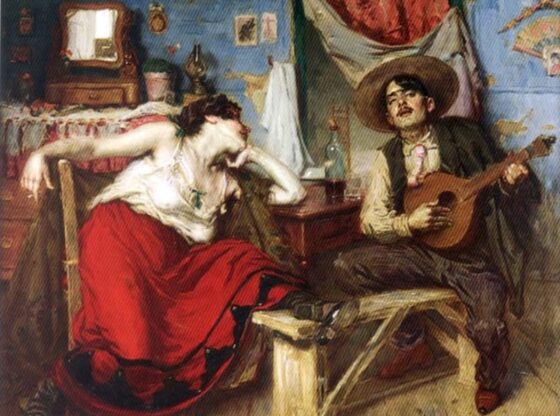

The historian Sérgio Luís de Carvalho has been publishing several portraits of Lisbon; six books until recently, and recently another volume: Lisbon Fado singer. If before, the profile of this collection was more historical –Nazi, Jewish, Arab, African and Masonic Lisbon -, however there was already Cursed Lisbon and now this Lisbon Fado singer is not a news itemafter all, fado has been Intangible Cultural Heritage of Humanity declared by UNESCO since 2011.
When the author is confronted with this new option, that of Fado, he does not agree that this is an unnecessary investigation, nor distant from the spirit of the series: “I don’t know if we can say that this volume is less historical than the previous ones. Fado is a phenomenon in itself, and the fact that it is so associated with a specific city, deserves study and reflection, to better understand both the Fado-phenomenon and the city that generated it. Sincerely – and I could be wrong – I don’t know of any other city that has generated its own type of music/song, with such striking and strong characteristics. Once again, this is a History of Lisbon – as the other books were – through a unique and autochthonous music/song.”
When asked if he was satisfied with the sources he found for this investigation or if he considers that there are still mysteries to be clarified, the author responds: “First of all, we have the mystery of the origins of Fado. This is the great mystery. Other than that, there is now enough material to discuss, without much doubt, the development of Fado from the first half of the 1800s onwards, from its most popular origins to its slow social acceptance. It should be noted that, from that time on, there are many written, phonographic and later videographic records, which helps a lot.”
There are several theses about the origin of Fado and until now it has been impossible to determine exactly which one is the most correct or whether there is another that is true. Sérgio Luís de Carvalho considers that there is a trio of explanations with the greatest strength among all the others: “In the first chapter, entitled Gestation, I point out the three most publicized and debated theses. Rui Vieira Nery’s thesis, which links the origin of Fado to African/Brazilian music and dances, with emphasis on lundum. José Alberto Sardinha’s thesis, which links the origin of Fado to tradition Portuguese troubadours, a tradition that continues in later street singers. The thesis – although less accepted today – that links Fado to songs and the Arab musical tradition, of which Arabist Adalberto Alves is one of the defenders. I believe that a definitive answer will never be reached, as we are talking about a long tradition, which is lost in the night of time.brought by the voices and memories of many people without faces, but with a voice.”
For the researcher, it is difficult to separate the most interesting phase between the various eras and characteristics of the Fado chronology: “In my opinion, they are all very interesting. Certainly, in musical terms, our days have brought many and varied musical influences to Fado, which, let’s say, has allowed its development, increase and transformation. The changes of the last 50 years, this successful mix of tradition and modernity, have allowed for an unparalleled expansion of Fado. Its internationalization also involves this. Fado grew, evolved and transformed. However, other periods were equally interesting. By the way, attention should be drawn to an aspect that is sometimes forgotten: the Fado poets. Fado, as we know, also lives off its lyrics. And then, throughout the 20th century and already in this century, many good lyricists contributed to the lyrical quality of this music/song.”
When asked whether it was the mythical figures of ancient fado, such as Severa and later Marceneiro, who gave it the strength to go through several centuries until it was established that it is the “national song”, Sérgio Luís de Carvalho hesitates a little: “It is a difficult question, because If it is true that fado singers are decisive for the expansion of Fado, as are its interpreters and composers in other musical genres, we can also ask what would happen if these two “monsters” of Fado had never existed. I’m sure there would be Fado anyway. Certainly, it would even be the same phenomenon as it is today. This does not mean that the contribution of Amália and Marceneiro did not shape Fado. This is an old question in History: what is the weight of individualities in the dialectic of the historical process?”