
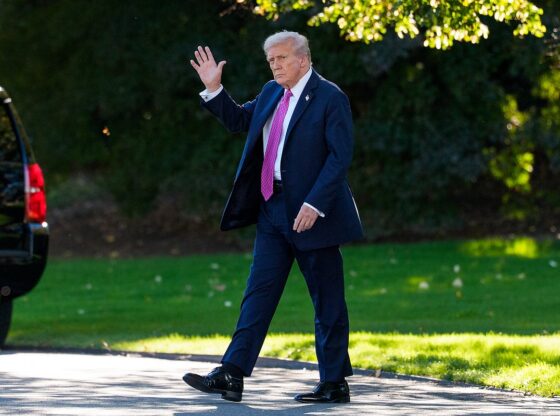

A Donald Trump’s first trip to Asia since returning to the White House In January it has been surrounded by some mystery. The President of the USA should arrive in Kuala Lumpur this SaturdayOctober 25, to participate in the Association of Southeast Asian Nations (ASEAN) summit. In addition to the inevitable trade issues and customs tariffs imposed by the USA, the head of the American state is eyeing another “victory” of his peacemaking efforts, with the signing of a peace agreement between Thailand and Cambodiarecently involved in conflicts, one of the “eight wars” that he says put an end to so many months in power.
But from Kuala Lumpur, Trump, who in his first term only participated in an ASEAN summit, having even avoided the virtual meeting during the pandemic, heads to Japanwhere he arrives in the midst of political transition. According to the Japanese Ministry of Foreign Affairs website, the American president will pay a state visit to Emperor Naruhito, also meeting with the new prime minister, Sanae Takaichi, who has just taken office. The first woman to reach the head of a government in Japan, Takaichi was a protégé of Shinzo Abe, the former prime minister assassinated in 2022 after leaving office. Abe was close to Trump and analysts, such as Michael Greene, George W. Bush’s national security advisor and now leader of the Center for US Studies in Australia, cited by AP, believe that Takaichi could fill that role. Greene also recalls that working with Trump and keeping him committed to traditional US alliances “requires a level of interaction and trust that none of the Asian leaders have.”
The analyst admits that this American Administration does not seem to have “a clear strategy for Asia”. Until now, the American president has used tariffs to mitigate what he describes as unfair trade practices, angering countries that often have the United States as their largest export market.
From Tokyo, with which Washington reached a trade agreement at the beginning of the year that included the promise of 550 billion dollars in investments in projects in the USA, Trump heads to South Korea. And if the president is officially going to participate in an Asia-Pacific Economic Cooperation (APEC) summit, All eyes will be focused on the planned meeting with Xi Jinping.
In recent weeks, tensions have risen especially with China’s announcement of restrictions on exports of rare minerals. Trump has threatened to retaliate with tariffs so high that he himself admits they would be unsustainable. With expectations at an all-time high, many fear, according to the AP, that a false step could send shockwaves through American industries, already shaken by Trump’s aggressive tariffs and layoffs following the shutdownthe federal government shutdown that has been going on for 23 days (the record belongs to Trump, in his first term, and is 35 days). And that a rivalry between the two leaders could lead the international economy into a downward spiral.
Before leaving for Asia, Trump assured that China “has treated us with great respect” since he took office. And he said: “I could threaten you with many other things”, but “I want to be good for China”.
Another open question will be the trade negotiations with South Korea, which faces US tariffs that could harm its automobile industry. However, Seoul refused Trump’s demand for a 350 billion investment fund similar to Japan’s.
A trip full of uncertainties that would both alleviate tensions in the region, restore the relationship between the US and Asia and result in trade agreements capable of leaving the world breathing a sigh of relief or, as he admitted a few days ago to the magazine Fortune Rush Doshi, Joe Biden’s former adviser on China, is heading towards “disaster”.